
New York apartments don't leave much room to hide
A one-bedroom in Chelsea, a prewar walk-up in Hell's Kitchen, a Park Slope co-op with a board that already asks too many questions, a share in Jackson Heights. Whatever you've got, someone's eventually standing in your kitchen with a wrench, and there's nowhere for you to disappear to while they work.
Chelsea and Hell's Kitchen have been Manhattan's gay neighbourhoods for decades. Jackson Heights plays that role for Queens and has hosted Queens Pride since the early 1990s, and Park Slope has long been linked with the city's lesbian community. None of that history means the plumber at your door today knows any of it.
That's the moment "gay plumber near me NYC" gets typed into a phone. Not out of politics. Out of wanting the next hour to be boring.
Old buildings, older problems
Prewar plumbing, co-op and condo boards with their own rules about who can work in the building, and supers who've seen every kind of tenant. A radiator that floods at midnight in January doesn't wait for you to find someone you trust.
Word of mouth works fine until you've just moved from Chicago and don't have three years of recommendations built up yet.

The unglamorous fantasy
Nobody needs to wave a flag. You want an electrician who reads the buzzer names, says nothing about it, and gets on with the panel. A contractor mid-renovation who asks "whose side of the family is the wedding on?" the same way he'd ask about a paint colour. Competence, with nothing extra required of you.
Before anyone starts work in New York
- Plumbers and electricians are licensed by the city. In New York City, plumbing and gas work has to be done by a licensed master plumber, and electrical work by a licensed electrician. You can look both up on the NYC Department of Buildings website.
- Contractors need a home improvement licence. Anyone doing renovation work on your home in the five boroughs generally needs a licence from the Department of Consumer and Worker Protection. Check it before you sign, and get a written contract.
- Your building has rules too. Most co-ops and condos want an alteration agreement for anything beyond small repairs, and they'll ask your contractor for a certificate of insurance naming the building. Ask your managing agent what they need before you book anyone.
- Renting? Repairs are usually your landlord's job. If they won't act, you can report it through 311, and the city's housing department follows up.
Trade by trade
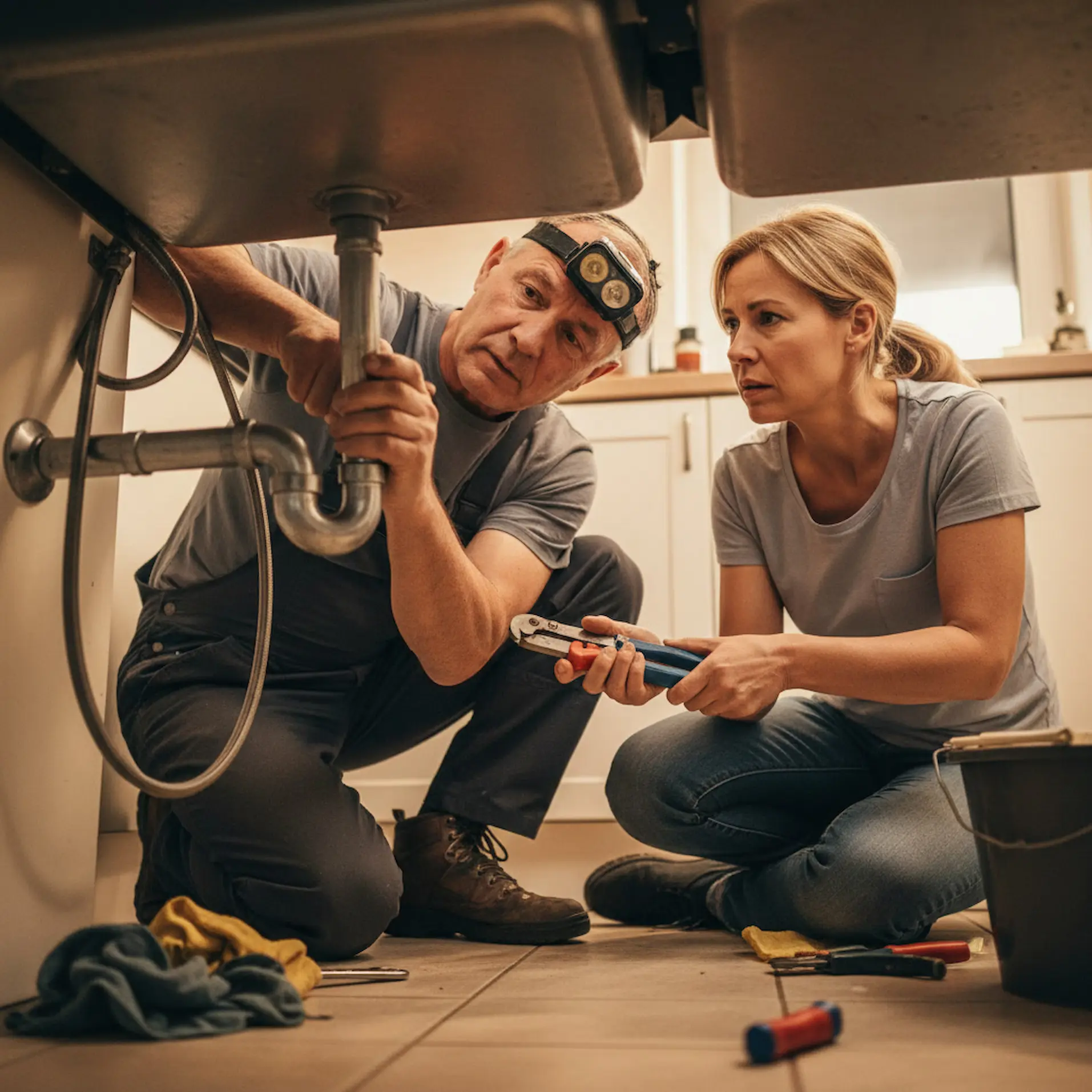
Plumbers. Old pipes and a leak that won't wait for a reference from a friend three boroughs away. Ask for their licence number when you call, and check it before they arrive if you can.
Electricians. Prewar wiring in a converted brownstone is its own specialty. You want someone who's done a hundred of these, not someone learning on yours, and who treats your household as ordinary while they're at it.
Contractors. A gut renovation means months of someone in your space. Every job here runs long anyway, so make sure the licence, the insurance and the building's paperwork are sorted before the first day, not halfway through.

Attorneys and accountants. Rent stabilisation, co-op bylaws, and estate planning for unmarried or chosen-family households are all complex. Check an attorney on the New York State attorney search before you sign anything.

What the directory does, and what it doesn't
The LGBTQ+ Professionals directory on Among Our People lists tradespeople and professional services across New York, so you're not starting from zero every time you move.
Every professional chooses how much to have checked. Some have an ID Verified badge, which means they've passed an identity check with a photo ID and a selfie. Some also have a credential badge, which means they've uploaded a diploma or qualification and we've checked it matches their name and their trade. Many listings have neither, and that's their choice.
A badge tells you who someone is and that their paperwork is real. It can't tell you how good their work is, whether they're insured today, or whether they hold the licence New York requires. So do those checks too, every time.
Nobody's asked to prove anything about who they are to use it. It's self-declaration, the same as everywhere on Among Our People.
Questions New Yorkers actually ask
Does my co-op board need to know why I picked this person?
No. The board will want the usual paperwork, the licence and the insurance certificate, and that's all.
Can I find someone in my borough?
Search by your area. How many listings you'll see depends on who's signed up near you so far.
Does a badge mean you've vetted the work?
No. Badges confirm identity and, where shown, a qualification document. They aren't a review of anyone's workmanship.
Do I have to prove I'm LGBTQ+ to use this?
No. Self-declaration is enough for everyone, everywhere on Among Our People.
Find yours
Browse LGBTQ+-friendly tradespeople and professionals across New York before the next emergency makes the decision for you. ✦
Last reviewed: 17 October 2026