

The numbers first
The average private rent in London was £2,332 a month in August 2026, according to the ONS. That figure covers every tenancy, including people who've been in the same place for years and whose rent hasn't been reset, so if you're signing a new tenancy now, expect to be quoted more.
Rooms are a different market. SpareRoom's figures for July to September 2026 put the average London room at £932 a month, bills included, and £1,002 in inner London. The spread is wide, from £752 in Manor Park to £1,682 in South Kensington.
London rents were 3.5% higher than a year earlier (ONS, August 2026). That's far gentler than the sharp rises of a couple of years ago, but rents are still going up. The market has cooled. It hasn't become cheap.
For LGBTQ+ renters, there's an extra layer on top. In a 2022 survey for Generation Rent and the LGBTQ+ youth homelessness charity akt, nearly one in five LGBTQ+ private renters said they'd faced discrimination from a landlord or letting agent because of their sexual orientation. Searching for a home while deciding what to disclose, and to whom, is a cost mainstream housing platforms don't account for. Among Our People does.
Where the community lives
London's queer geography has always been in motion. The map of 2026 looks different from the map of 2010, and the map of 2010 looked nothing like the 1980s. What follows is an honest picture of where people actually live, what they pay, and what each neighbourhood offers.
Soho and the West End
Zone 1 | Rooms in W1 averaged £1,519 a month (SpareRoom, July–Sept 2026)
 Old Compton Street remains London's most recognisable queer landmark. The bars, the history, the visible community — it's all still there, and in June 2026 it gained a new landmark: COVEN: Headquarters opened on 19 June in the former G-A-Y Bar building, a café and community space by day and a club by night. But Soho is expensive and dense. Living here means Zone 1 prices for what is often a small flat or a flatshare with strangers. Most people visit Soho; few can afford to live in it. If you can, the community is on your doorstep. If you can't, you won't miss the social life — the scene radiates out.
Vauxhall and Lambeth
Zone 1–2
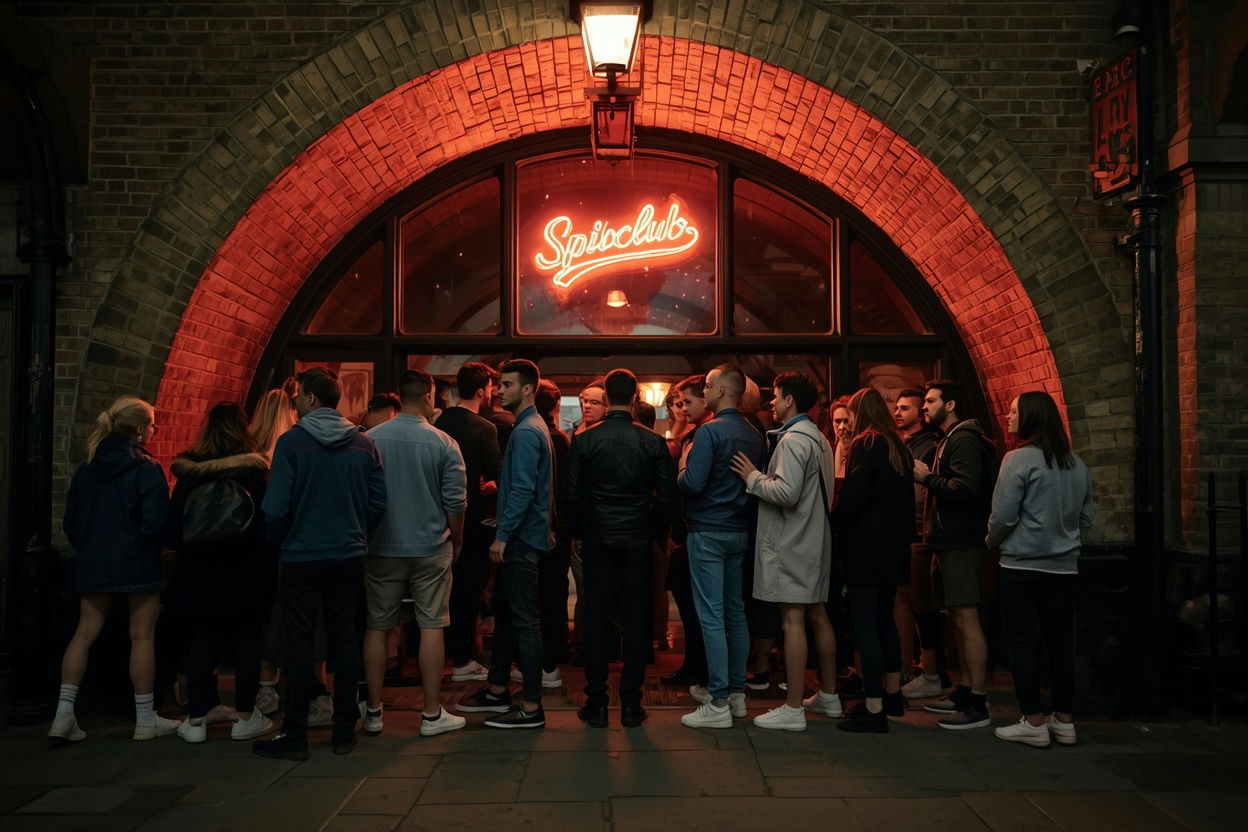 Vauxhall is where London does its serious late-night clubbing. The Royal Vauxhall Tavern has been a cornerstone of the scene since the 1980s, and the railway arches host a circuit that runs until dawn. Beyond the clubs, Vauxhall has good green space, strong transport links into the City, and a queer history that runs deeper than Soho's. Clapham — just down the road — is popular with young professionals and expats. It has the feel of a neighbourhood rather than a nightlife hub: the Common, weekend markets, institutions like The Two Brewers. South London is often overlooked by people arriving from outside the UK. It shouldn't be.
Hackney, Dalston, and East London
Zone 2
 East London is where the energy is. Hackney and Dalston have built a creative, politically engaged, deeply inclusive queer scene that feels distinct from the bar-and-club circuit of Vauxhall and Soho. The venues here are smaller, weirder, and often more interesting: Dalston Superstore, The Divine (drag and cabaret with a queer-first door), The Common Press in Bethnal Green (queer bookshop and café — the best place to meet the community in daylight hours). La Camionera on Well Street in Hackney is a bar run with sapphic and FLINTA people in mind. Rents here are more moderate than central London. Stoke Newington, just north, is popular with LGBTQ+ families and couples looking for something quieter and leafier.
Peckham and South-East London
Zone 2
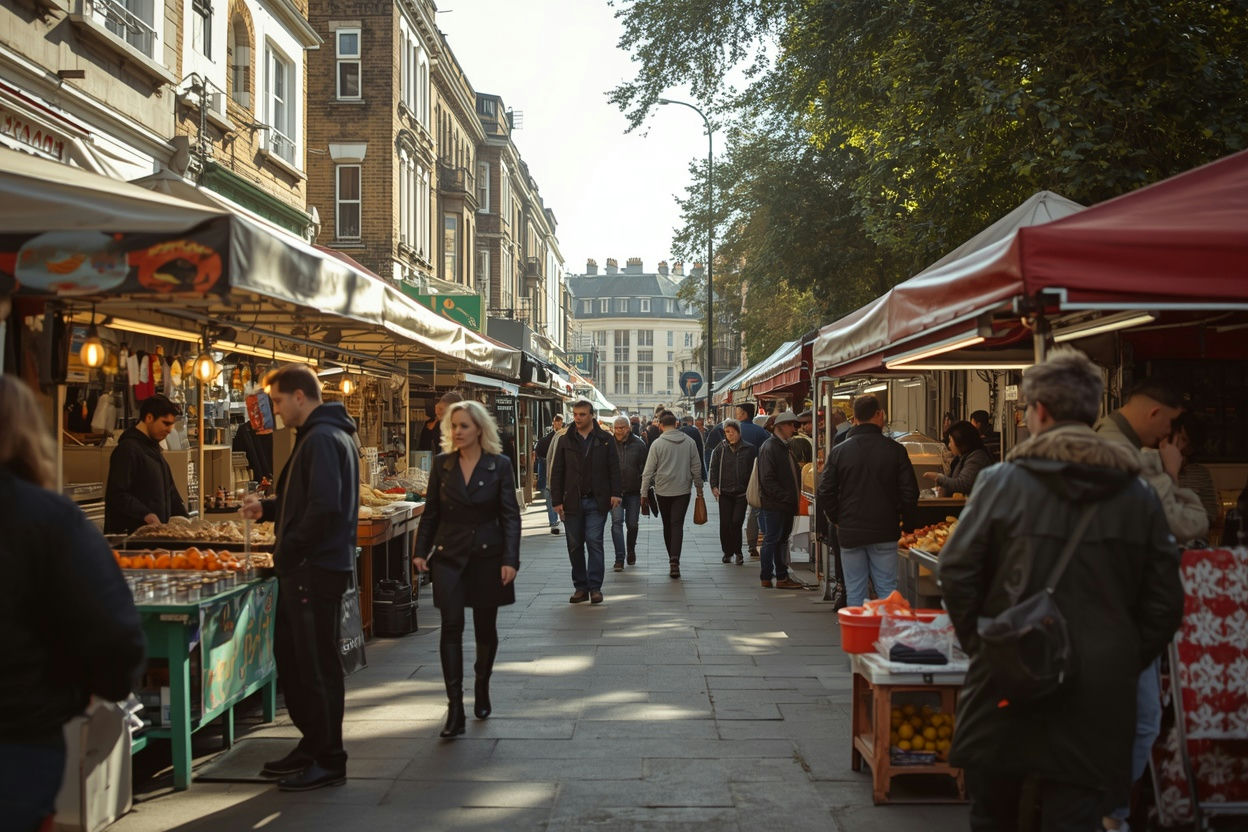 Peckham has undergone a decade of transformation. The underground queer club scene here is one of London's best-kept secrets, and the neighbourhood has a warmth and diversity that feels genuinely welcoming. It's also more affordable than Hackney and has good connections into central London. The area around Rye Lane has become a genuine destination — independent food, music, and a community feel that is hard to find closer to the centre.
Budget zones: Lewisham, Walthamstow, and beyond
Zone 3–4 | Rooms in outer London averaged £800 a month (SpareRoom, July–Sept 2026)
If affordability is the priority, Zone 3 and 4 open up significantly. Lewisham is one of the most diverse boroughs in the city. Walthamstow has seen Overground investment that makes it genuinely well-connected. Finsbury Park offers a middle ground between inner and outer London at a more accessible price point.
A note on flatsharing
For most LGBTQ+ Londoners, the realistic route into the city is a flatshare. The challenge with mainstream flatsharing platforms is that they offer no mechanism for LGBTQ+ people to find housemates who understand or share their experience. The result is a process of disclosure and guesswork.
This is exactly what Among Our People is built for. A flatshare found through Among Our People starts from a different premise: the community is already understood. You're not explaining yourself from scratch.
The broader housing picture
The figures on LGBTQ+ housing in the UK are hard reading.
In the 2022–23 LGBTQ+ Housing and Homelessness Survey, run by researchers at Cardiff Metropolitan University and Cardiff University, 47% of the 1,118 people who took part had experienced homelessness at some point in their adult lives. The survey used a broad definition, counting sofa surfing, temporary accommodation and living with domestic abuse alongside rough sleeping. Sofa surfing was the most common, reported by a third of respondents. Trans, non-binary and agender respondents were hit hardest: more than a third had experienced at least one form of homelessness in the past year alone, nearly twice the rate for the group as a whole. It was a voluntary online survey rather than a random sample, so it tells us about the people who took part, not every LGBTQ+ person in the UK.
A separate study points the same way. Stonewall's LGBT in Britain Trans Report (2018) found that one in four trans people had experienced homelessness at some point in their lives. And demand keeps rising. The specialist charity Stonewall Housing supported 3,733 LGBTQ+ people between April 2024 and March 2025, up from 3,202 the year before, a 16.6% increase.
Among Our People exists in part because the mainstream housing market does not have good answers to these realities. A platform built around community, trust, and shared identity cannot solve a structural housing crisis on its own — but it can make the individual experience of navigating that crisis less isolating, less arbitrary, and less frightening.
Practical notes for 2026
 The Renters' Rights Act 2025 brought in its first big changes in England on 1 May 2026. No-fault (Section 21) evictions have ended. Rent can only go up once a year, with two months' notice, and you can challenge an increase at a tribunal if you think it's above the market rate. A landlord can't take rent before you've both signed, and between signing and moving in they can usually ask for no more than one month's rent. A national landlord database is due later in 2026, with a landlord ombudsman after that.
Peak season for lettings in London runs from May to September. If you can be flexible, searching in late autumn or winter gives you more room to negotiate and less competition. And remember the ONS average includes long-standing tenancies, so budget for new asking rents to sit above it.
Find your people. Find your place.
London rewards patience and specificity. The city is large enough that there is almost certainly a neighbourhood that fits your life, your budget, and the kind of community you want to build around you. The challenge is knowing where to look — and who to look with. ✦
Looking for a room in London?
We run a page for this: LGBTQ+ rooms and flatshares across London, listed by the people who actually live in them. Listing a room is free.
There's a launch code on that page, Launch2026. It pays for your ID check, and gives you a month of applying to brand-new rooms the moment they go live instead of waiting. If you're the one with the room, it also pins your listing to the top of the search for 30 days and unlocks every applicant's references. One per person, while they last.
Last reviewed: 17 October 2026
Sources
- ONS, Private rent and house prices, UK: September 2026 (August 2026 data)
- SpareRoom, London room rents, July to September 2026
- Landlord Today, report on the Generation Rent and akt survey (June 2022)
- England and Turnbull, 2022–23 LGBTQ+ Housing and Homelessness Survey (2024)
- Stonewall, LGBT in Britain: Trans Report (2018)
- Stonewall Housing, Impact Report 2024–25
- Attitude, Coven opens at the former G-A-Y Bar (May 2026)
- GOV.UK, Rent in advance and deposits
- Which?, Key dates for the Renters' Rights Act